



As attention on embodied carbon in construction grows, concrete is under increasing scrutiny. Regulatory pressure, public-sector procurement requirements and investor scrutiny are converging on a clear expectation: companies need to understand, explain and drive down the carbon in the concrete they use.
But data across the sector remains patchy. Project teams are wary of being asked to report on concrete emissions before industry-wide benchmarks, tools and datasets are in place. That means action is delayed while waiting for “perfect” information, or the data produced offers limited insight into where can be made.
Through , Climate Group works with companies using concrete to address this gap. It supports members to improve transparency, trust carbon data, and turn insights into real-world acceleration of lower carbon concretes. Core to our work is pushing for more consistent, granular reporting, so that the data can show more accurately where emissions actually sit within a project.
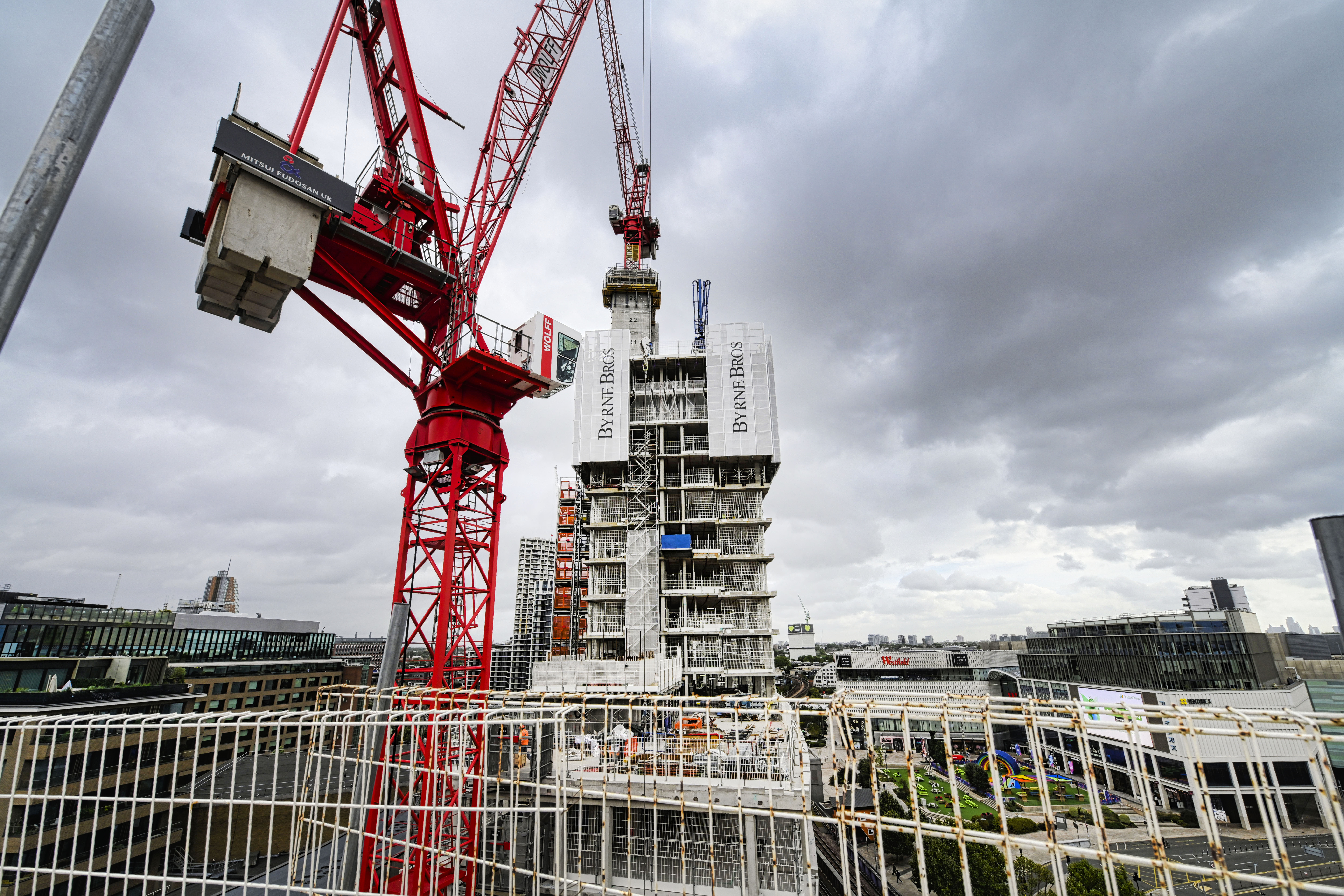
One example of how this is being done comes from one of ConcreteZero’s founding members, Byrne Bros (Formwork) Ltd.
Moving forward, even without perfect data
Like many contractors, Byrne Bros faced growing expectations from clients to demonstrate embodied carbon performance, often early on in the project. With evolving datasets and modelling, the company took action.
Byrne Bros began calculating embodied carbon consistently across projects from 2020, using relatively straightforward assumptions and average emission factors. While not claiming absolute precision, their approach provided a credible and repeatable basis for understanding carbon impacts.
Since joining ConcreteZero in 2022, and using the ConcreteZero reporting framework, they have been even better positioned to meet client expectations on carbon reporting. The framework has supported clearer, more granular and consistent data at project level, helping to move discussions with clients beyond compliance towards practical carbon reduction.

Structure matters as much as numbers
By organising carbon data in a consistent format, Byrne Bros was able to compare performance across projects and start identifying recurring patterns. This helped shift conversations internally from whether the numbers were “perfect”, to what they revealed about emissions and where improvements could realistically be made.
When embodied carbon is reported only as a single headline figure, it can be hard to see the opportunities. Breaking it down into more detail, particularly reporting by structural element, makes it easier to see which parts of a project are actually driving emissions and highlight the design, material or construction choices that can have the greatest impact.
In this context, reporting becomes less about compliance and more about insight.
Creating a common language for action
This is what ConcreteZero’s reporting framework was designed to support. By asking members to report embodied carbon by structural element, using a standardised template, the framework helps create a common language across projects and organisations.
“Reducing embodied carbon depends on clarity as much as ambition, as Byrne Bros have shown”, said Nia Bell, Senior Manager ConcreteZero. “More consistent, granular reporting helps teams understand where emissions are coming from and focus their efforts where they matter most.”
For individual companies, this provides clearer visibility and supports more informed decision-making. At a sector level, it enables comparison, shared learning and stronger signals to the supply chain, helping to move beyond isolated project-level efforts towards wider change.
As Byrne Bros has demonstrated, progress does not just depend on perfect data. What matters is having transparent, structured and comparable information based available data that is credible, so decisions can be taken with confidence.
As expectations around embodied carbon continue to rise, the challenge for the sector is no longer whether to report - but how to ensure it can genuinely support faster adoption of lower carbon concrete.