



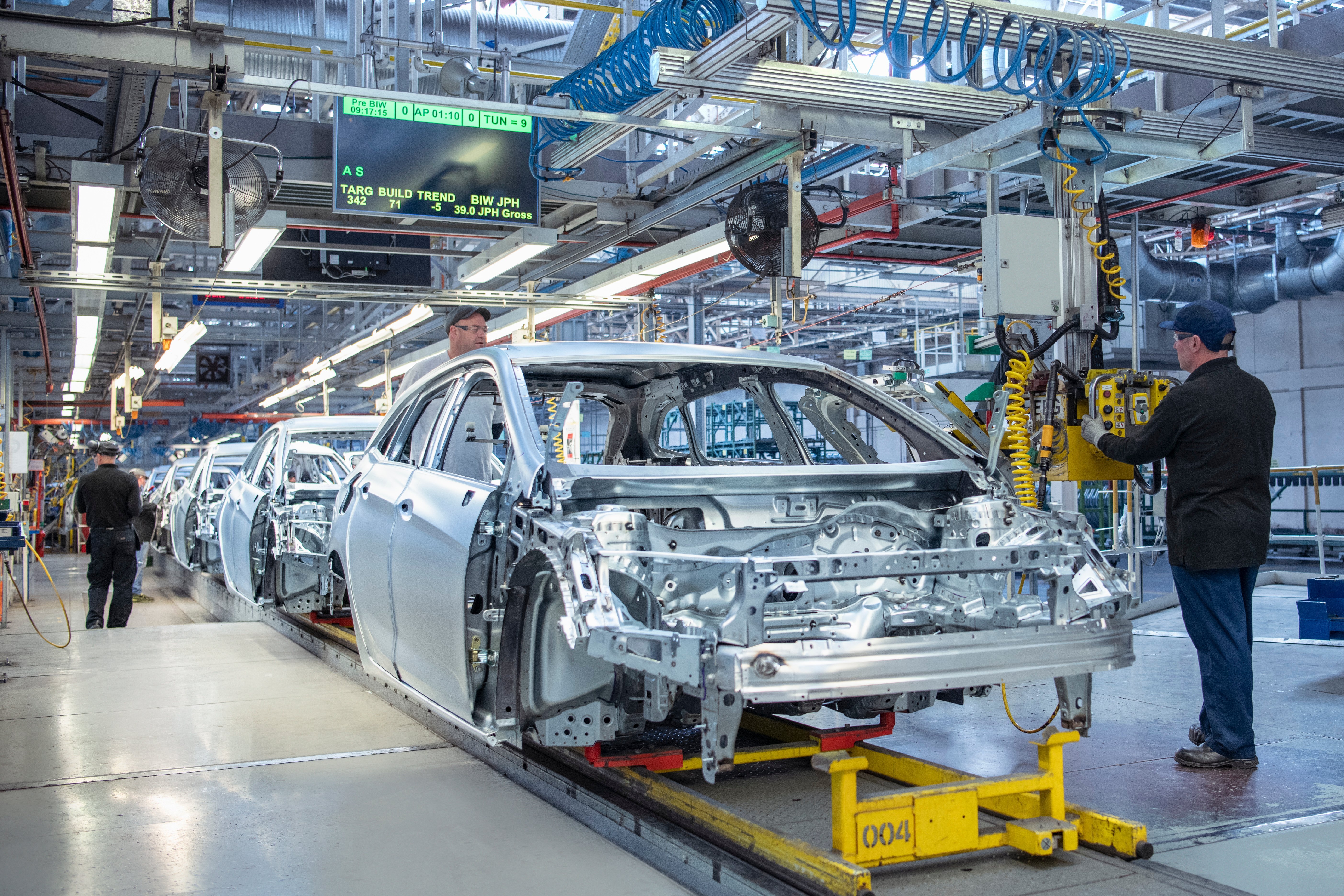
Steelmaking is responsible for around 7% of global carbon emissions. In Europe, nearly a fifth of all steel goes into cars - making the automotive sector a key driver of demand and a lever for decarbonisation. And while the sector has made progress on cutting tailpipe emissions, the carbon footprint of steel still needs urgent attention.
The good news? The industry is stepping up. Leading automakers are increasingly driving demand for lower emission steel. But as key industry voices made clear at our latest SteelZero roundtable, much more work is needed to deliver the scale of change required.
At the roundtable, 11 of Europe’s leading automakers and supply chain actors came together to discuss what is needed to accelerate the shift to low emission steel. Their message was simple yet profound: a more radical approach is needed, and genuine collaboration is the engine that will drive real progress.
A competitive market for green steel
As scrutiny of supply chains intensifies, automakers are under rising pressure and are seeing the need to source low emission materials, including steel. Yet within Europe, access to lower emission steel remains limited. Meanwhile, more than 70% of Europe’s primary steel sites need reinvestment by 2030 - making the next few years decisive for the future of the sector.
Participants stressed the need for steelmakers to scale up both primary and secondary low emission steel production - while staying competitive in global markets.
“We must create a competitive framework for our transition to low emission steel - whether through green primary methods, H₂-DRI, or circular alternatives,” one participant said.
Concerns were also raised about overreliance on mass balance as a placeholder. The call was clear: the auto industry must push for truly decarbonised steel, driving stronger demand to accelerate and secure industrial transformation.
Today, green steel accounts for less than 1% of global steel production, highlighting the urgent need to expand supply as demand from the automotive sector is building.
Call for radical change
Participants agreed: material emissions need to move to centre stage. Including steel in standardised vehicle life-cycle assessments (LCAs) was flagged as a key step - making emissions more visible to consumers and sharpening the business case for switching to lower emission steel.
Finance was also noted as a critical challenge. Traditional finance models are falling short of the scale needed. “We’re going to have to step up and contribute,” one automaker said, highlighting the need for innovative public-private funding partnerships.
The IEA estimates over $1.4 trillion is needed globally to decarbonise steel by 2050.
Scaling scrap and enhancing scrap quality
Recycled steel will be a major part of the transition - but it can't meet all automotive sector needs today. High-grade scrap is already in short supply, so better sorting, processing, and cross-sector flows are urgently needed.
“I don’t have a problem making a car out of an old refrigerator - but the quality of scrap steel processing has to improve,” said one participant.
Calls were made to expand electric arc furnace (EAF) capacity and introduce policies that cut downcycling and promote true circularity.
Policy needs to go further, faster
Participants made it clear: without stronger political leadership, steel decarbonisation won't happen at the speed or scale required. Hydrogen infrastructure was singled out as mission critical.
“The hydrogen infrastructure is essential for European steel mills. Without low-cost, renewable energy, we risk losing primary steelmaking to other regions,” one automaker warned.
Participants called for policy measures including mandatory carbon footprint reporting, stronger end-of-life vehicle regulation, and circular economy standards to close material loops and reward lower-impact design choices.
Collaboration is the engine of change
Despite the challenges, momentum is building. Many automakers are already partnering with suppliers to secure lower emission steel, and they’re helping their Tier 1 suppliers do the same. SteelZero members like Volvo Cars and Polestar are leading the way, committing to only use 100% net zero steel by 2040.
“There are pockets of progress being made, and it’s our role to share that with each other and scale it going forward,” said Jen Carson, Climate Group’s Head of Heavy Industry.
The roundtable reinforced a central truth: no single company can deliver this transition alone. But together, the sector has the power to reshape the future of green steel in Europe - and beyond.
What’s Next?
The European automotive sector has a clear opportunity to lead - but structural change is needed, and fast.
Key questions remain: How can policy and implementation address real-world challenges? And how can costs be shared appropriately across the value chain?
As one automaker put it: “We need to be a little more radical in our thinking. If we don’t solve the problem of energy costs, primary steelmaking will move outside of Europe, and we’ll be left importing instead. That would be a huge loss for the continent.”
If automakers, steelmakers, and policymakers work in step, Europe can stay at the forefront of the green steel transition - making low emission steel the new industry standard, not the exception.