



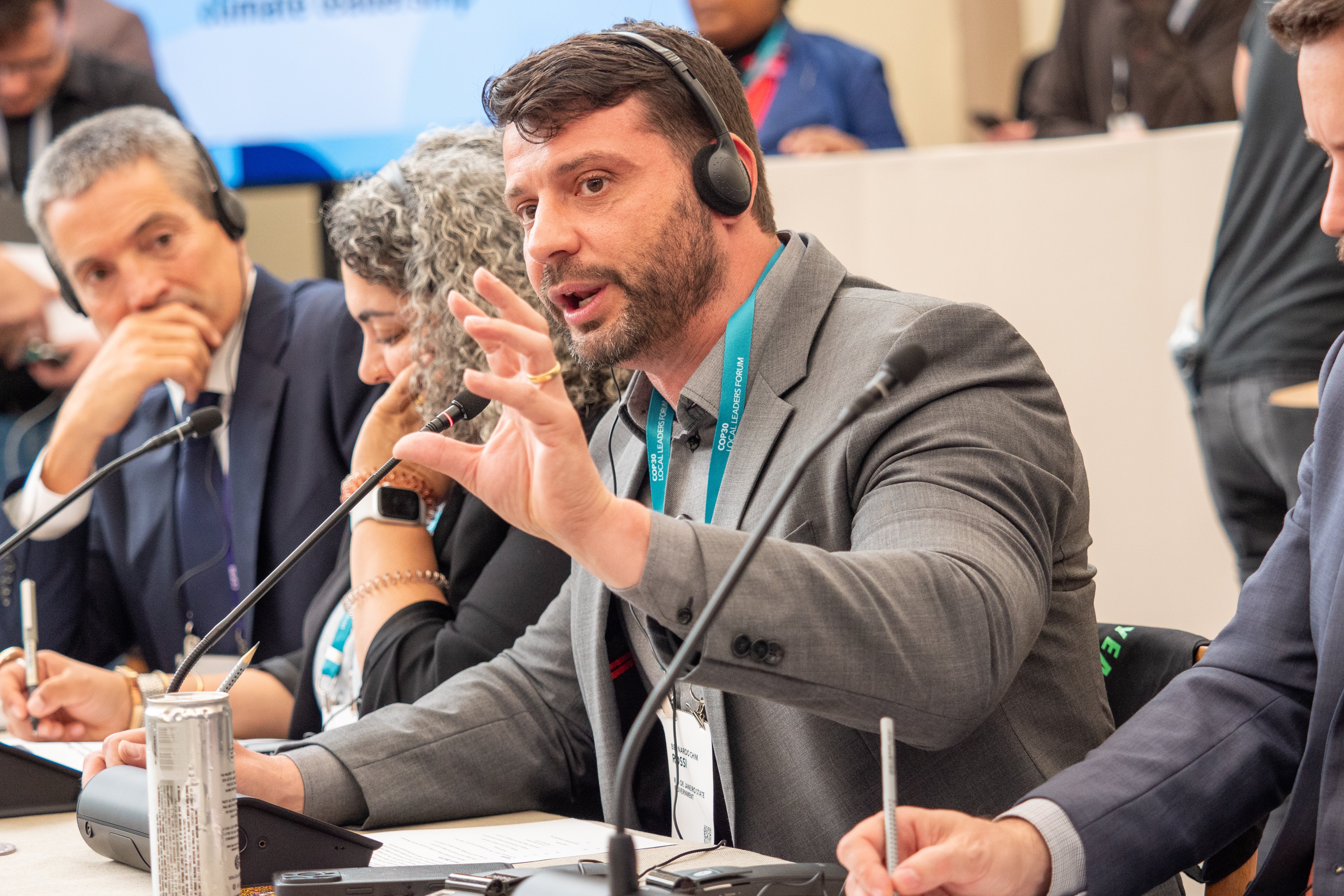
Yes – from California to Santa Fe, states, regions, and cities are taking centre stage. Why? Because subnational governments are responsible for up to 80% of climate action, underscoring their critical role in driving global ambition. While national governments waver between lukewarm and low ambition, it’s those closest to communities that are closing the ambition gap.
Today, hundreds of subnational leaders have gathered in Rio for what’s being called a decisive moment in climate governance – a space where governors and mayors will set the pace and tone ahead of Belém for the action the world so urgently needs. With last year confirmed as the hottest on record and 2025 already marked by extreme weather events, the cost of inaction has never been clearer. But louder still is the united voice of states, regions, and cities.
Local action drives global impact. Taking it one step further, Cross River State, Nigeria, has introduced a new initiative to reach marginalised communities. “We’ve set up a climate desk at every local government council,” said Commissioner Oden Ewa of Cross River State during the first event of the day. With 18 local councils, that means 18 operational climate desks driving climate action, greening budgets, strengthening communities and the economy – and creating green jobs.
States and regions now sit at the nexus of ambition and delivery. Their recognition has surged – from side room to main stage. In just five years, there’s been a major shift: 80% of Parties now reference subnational governments in their Nationally Determined Contributions (NDCs), up 19% from the previous round. Even more striking, 63% actively recognize them as partners in planning, implementing, and monitoring climate action, with many formalising their roles through frameworks that empower local planning and delivery. It’s a step change that signals growing recognition of the vital role of states, regions, and cities in driving climate ambition from the ground up.
Leading the transition from the ground up
Over 70% of subnational governments in the Under2 Coalition are powering the clean energy transition through ambitious climate action plans. “These plans are matching or surpassing national targets,” said Nehmat Kaur, Director of the Under2 Coalition. “It’s really incredible and a testament to how much is happening at the subnational level,” further explains Champa Patel, Executive Director for Governments and Policy.
West Kalimantan’s plan exemplifies this leadership. It takes a jurisdictional approach to cutting emissions through four pillars: regulatory reform that integrates green growth into provincial plans; multi-stakeholder collaboration via a strengthened REDD+ (Reducing Emissions from Deforestation and Forest Degradation) working group; law enforcement through stricter permit reviews and sanctions; and climate finance, with funds secured from the Green Climate Fund and other sources to support sustainable development and incentivize good land and forest management. The Indonesian province also aims to establish more Green Schools by 2030 – a new policy they call Aksikita – “our action.”
New South Wales has set targets to reduce emissions by 50% by 2030 and 70% by 2035 – ambition echoed across the coalition in states such as Santa Fe, Taraba, Rio Grande do Sul, and Minas Gerais, to name a few. “We have very impressive goals in Maryland,” explains Secretary for Environment Serena McIlwain. “We have a transition plan to make sure that we get there.”
A unified voice
We broke the silo way of working 10 years ago, when we formed a network of leaders eager to lower emissions and advance the transition. Serena McIlwain reiterates that, “we (states and regions) are better when we work together.” It’s this collective strength that amplifies the voice of states and regions, inspiring others to ‘buy in’— improving lives on the ground and countering misinformation about net zero with real examples of affordable renewables replacing fossil fuels. “Don’t be afraid to steal ideas; none of us have to invent the wheel. Let’s work together – saving energy and money,” said Lord Mayor of Adelaide, Jane Lomax-Smith.
The Under2 Coalition, now representing two billion people across nearly 200 subnational governments and accounting for more than half of global GDP, is anything but 'sub.' It’s mobilising the global economy for a Paris-aligned future — led by the very actors who can keep the goal of 1.5°C alive.
But this goal requires financing, says Dr Patel. “Collective action is great, but how do we achieve adequate finance? We’re in danger of being in a room where we only speak to ourselves, but we need other actors such as financiers."
Looking ahead
Climate change isn’t slowing down — and neither is the Under2 Coalition. As we head toward COP30, our message is clear:
- Finance: We’re calling for adequate funding to reach subnational levels, where ambition is not in short supply.
- Leadership: We’re formalising the role of subnational leaders in global climate processes like COP.
- Implementation: We’re offering scalable, bankable solutions to keep the world on track for a net-zero future.
In this era of subnational leadership, the world is watching — not for pledges, but for action.
“The next five years will define the next 50. Let’s make sure when we look back, we look back with pride.” — Jean Lemire, Climate Envoy, Quebec.
Tomorrow, subnational leaders will set the pace. From methane abatement to unlocking climate finance, states and regions will once again take centre stage at the Global States and Regions Summit.