



-1.png)
In a fast-changing world where many national governments are shying away from taking measurable climate action, the role of state, regional and devolved governments is becoming increasingly important in the fight against climate change. And with that comes the need for sound, sustainable investment strategies and greener budgets.
That is why the Next Generation Budgets was launched in 2024 to train subnational governments on green budgeting tools so they can identify and access green investment opportunities to support their net zero emission goals. This week, we brought together governments from Europe and North America in Brussels for an in-person workshop.
Over twenty-nine government officials from Baden-Württemberg, the Basque Country, Catalonia, Colorado, Emilia-Romagna, Hawai’i, Lombardy, Maryland, North Rhine-Westphalia, Scotland, and Wales, came together to strengthen green budgeting methodologies, exchange views on investment strategies and launch a community of practice for enhanced collaboration on increasing finance to reach climate goals.
The event was held against the backdrop of the EU Clean Industrial Deal and the EU Commission's latest proposal, which states the need for green investment to support Europe's decarbonisation goals. The EU aims for these investments to largely come from the private sector with incentives from governments.
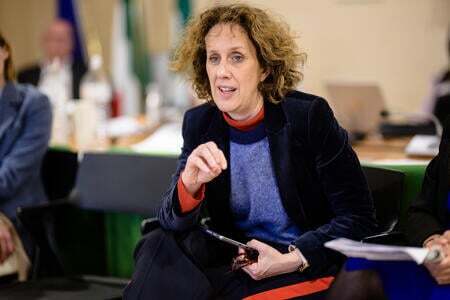
Climate Group's CEO, Helen Clarkson, opening the Next Generation Budget Project workshop.
Opening the event, Climate Group's CEO, Helen Clarkson, said:
"In this crucial year, climate finance and green budgeting will be key to sustaining progress. Commitments alone won't cut it; we need robust financial frameworks and investment strategies to turn ambition into meaningful action. Every dollar of public spending needs to have climate as a pre-condition.
With the world witnessing the warmest year in 2024 and the devastating impact it had on millions affected by extreme weather events, from wildfires to extreme flooding, Clarkson reaffirmed the urgency for climate finance.
“Simply put, we need to keep greening subnational budgets. Without integrating climate action into financial planning, even the most ambitious policies can become unfunded aspirations. And that's why projects such as this (Next Generation Budgets) are so important and are at the heart of what we're doing as a coalition."
So, what is green budgeting, and how does it support net zero emission goals? It is a tool that supports the alignment of public finance with climate objectives. An important green budgeting tool is the tagging system that labels state expenditures from highly favourable (compatible with carbon neutrality) to the extreme other end, unfavourable. Clément Chevalier, Senior Consultant in Sustainable Transformation and Strategy at EcoAct sums up the process as "a helpful tool that can lead the way towards the Paris Agreement."
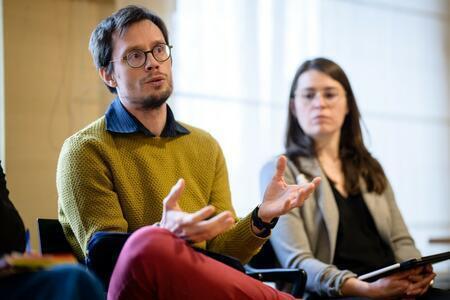
Sébastien POSTIC, PhD Research Fellow – Public Finance, Development, IC4E
"Green budgeting starts from the idea that you can use all the tools at the disposal of the state to nudge the economy away from fossil fuels towards a low carbon and climate resilient transition," explains Sébastien POSTIC, PhD Research Fellow – Public Finance, Development, IC4E
"Climate touches every part of the economy, and the states are basically a machine distributing money around the economy."
During the workshop, the participants put their skills to the test in a hands-on tagging exercise – tagging budgets according to their alignment or misalignment with green objectives.
Working in pairs, each group categorized budget items, including new buildings, road maintenance, bus fleet operations and meal purchases, into five categories: highly favourable, favourable, neutral, unfavourable, and undefined.
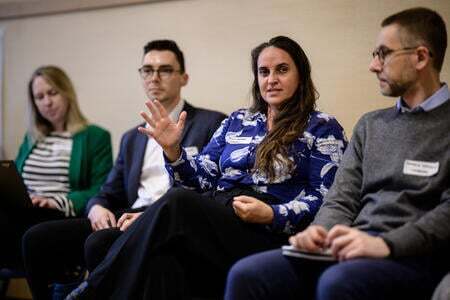
Launching the community of practice
On the second day, the Next Generation Budgets governments kicked off a Community of Practice (CoP) focusing on learning international approaches and solutions that foster private sector investments for climate projects and increase finance. The CoP will then meet virtually at least four times this year, to continue the cooperation and dialogue on this important topic, complemented by system change approaches. Building on what states and regions have learnt on green budgeting tools, the CoP will be a collaborative space to learn, share and address identified difficulties in charting climate investment roadmaps.
"There's a really strong tie between the people of Hawaii and our environment," said Leah Laramee, State of Hawaii Climate Change Coordinator. "So, this is really a great way for us to introduce climate change budgeting by connecting it to how we're protecting our environment to make sure that we have a clean, happy environment for future generations."
Adding to this, Laura H.E. Kaaku, Climate Mitigation, Adaptation, and Culture Manager at the Hawaii Department of Transportation, said: "Something we're learning about is how green budgeting can help to inform our decision makers as they're weighing the state's many pressing needs. And it can help to align our state's very bold climate goals with our spending. It's a way that we can be a little bit more transparent in how we're putting our money towards the climate actions that we're trying to address."
The event also welcomed a delegation from Wales, leaders in the circular economy and the second-best recycling government in the world. On the advantages of peer-to-peer learning, Robert M, Head of Decarbonisation, Government of Wales, said: "It has been really great to learn about the different ways that states are looking at how their budgets can be a really important mechanism for reaching their climate targets. Wales is at the start of their journey in terms of looking at green budgeting tagging, so it's been really informative to help our learning, and we're looking forward to taking this back to Wales and seeing what we can do."
Governments also worked together to draft core principles for subnational green budgeting, aiming to provide a reference framework for other Under2 Coalition states and regions interested in this approach. Key elements identified included the need for appropriate institutional design, securing high-level commitment from economy ministries, and piloting methodologies in key departments. Once finalized, these principles will be shared widely to help scale subnational green budgeting efforts across global Under2 Coalition members.
Green budgeting as a tool to align public finances with Paris-aligned climate goals has become increasingly widespread. The workshop underscored this growing momentum. By providing subnational governments with technical expertise and developing the community of practice, the Next Generation Budgets project continues to pave the way for more effective and impactful climate finance strategies at the subnational level.
"We are participating in the Next Generation Budgets workshop because it provides information tailored to states and regions and builds on our enormous spending and policy-making power," said Sarah, Policy Officer, North Rhine-Westphalia.
Closing the event, Senior Project Manager at Climate Group, Virginia Bagnoli said: "This has been an inspiring and rich event and we look forward to working with more states and regions while growing the existing group of ambitious subnational governments striving to green their budgets and access investments towards a greener economy."
The project will continue to ensure that states and regions receive technical training and valuable peer-to-peer support.
About Next Generation Budgets
The Next Generation Budgets project, led by Climate Group in partnership with the Government of North Rhine-Westphalia and funded by Stiftung Mercator, is supporting subnational governments in Europe and North America to integrate green budgeting practices into their financial and climate planning. Through technical training by Expertise France and a dedicated community of practice, participating states and regions are strengthening their ability to mobilize investment for climate action.