



North East India is one of the carbon neutral regions of the country, yet it faces significant threats from climate change. The region makes up about 8% of India’s land mass and comprises eight states. While the region’s states are well-known for their abundant natural resources, rich biodiversity, diverse indigenous population and cultural heritage, they rarely receive credit for remarkable efforts to combat climate change.
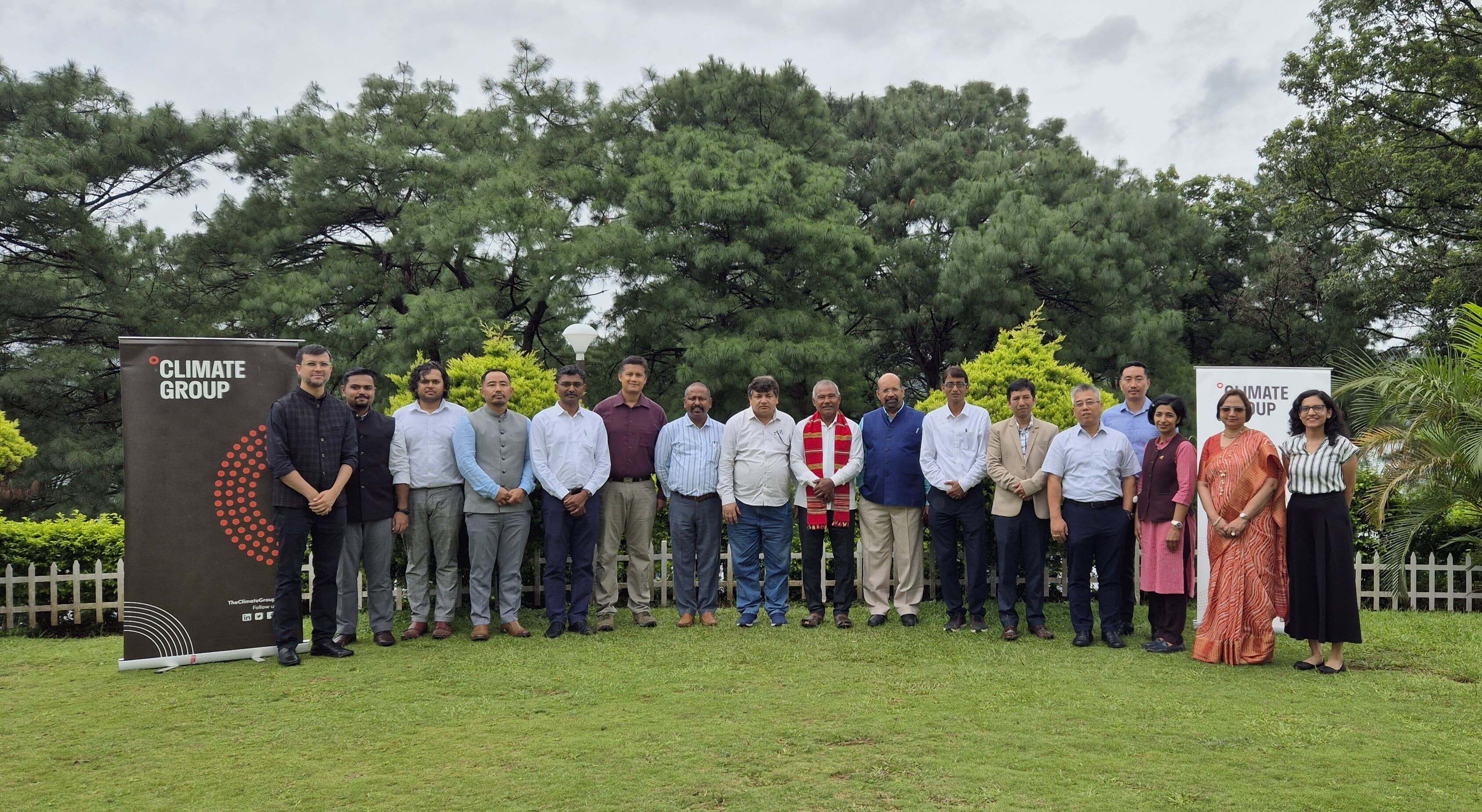
In August, we convened the inaugural North East Climate Forum in Shillong, Meghalaya. The Forum brought together senior government officials from six of eight states - Arunachal Pradesh, Assam, Manipur, Meghalaya, Nagaland and Tripura - along with eminent figures such as Padma Shri awardee Shri Jadav Payeng. Senior delegates from regional civil society organisations, including Aaranyak and the Indigenous People's Climate Justice Forum, also participated.
The North East Climate Forum facilitated peer-to-peer learning and knowledge exchange, preparing ground for a collective vision to accelerate climate action. Importantly, the deliberations reaffirmed the need for a regional platform which can help pool resources and amplify local climate solutions.
Key discussion topics in the Forum included:
- The importance of research-driven technical knowledge for effective project implementation.
- The need for financial resources to empower climate initiatives (climate finance).
- Various funding mechanisms for climate action and ways to access them.
The highlights from the deliberations were:
- Inadequate recognition given at national and international platforms to climate action in the region, which is hampering the states’ ability to attract essential funding and resources.
- Technical capacity of the existing workforce needs to be built. This is where organisations like Climate Group could play a key role. For example, our programmes like the State Climate Fellowship are designed to augment capacity and improve access to climate finance.
Examples of policy action currently being taken by the states were also discussed. Among them were:
The Bio-village 2.0 initiative from Tripura, which aims to develop sustainable model villages. It’s anchored by three pillars, namely, socio-economic growth, sustainable development, and biodiversity conservation. It uniquely employs a bottom-up approach, allowing local communities to influence project design and implementation. It also combines sectors like agriculture, horticulture, animal resources, fisheries, and renewable energy. Notably, it allows for selection of these sectors based on location and community needs rather than this being decided elsewhere.
Pakke Declaration 2047 is a unique policy in India and is being implemented in Arunachal Pradesh to achieve its net zero target by 2047. The policy has short (2023), medium (2030) and long-term targets (2047). It covers five domains (also known as “Panch Dharas”). These are:
- Environment, forest and climate change;
- Health and well-being of all;
- Sustainable and adaptive living;
- Livelihoods and opportunities;
- Evidence generation and collaborative action.
The domains are further divided into 12 major pillars and 75 strategies. These pillars and strategies provide a detailed roadmap for the state to become climate resilient and net zero by 2047. They not only align with India's Nationally Determined Contributions (NDCs) but also complement the 2030 Sustainable Development Goals, the Paris Climate Agreement of 2015, and the Sendai Framework on Disaster Risk Reduction-2030.
Meghalaya’s new development concept called the Environment State is an example of a strategic framework aiming to integrate nature into economic planning. It seeks to develop ecological regions as special Climate Action Zones (just like India’s Special Economic Zones) to create viable economics around them by providing incentives and subsidies for climate sensitive brands, products, and organisations.
Following the inaugural North East Climate Forum, we will further develop this platform to not only enhance local climate action, but also ensure that the region receives visibility. The Forum will continue to bring together key stakeholders from the region to work collectively and foster an ecosystem where local and indigenous climate actions receive amplification.