



Why concrete? Why Singapore? And why now?
Concrete is the backbone of our built environment and one of the biggest contributors to global carbon emissions. Yet progress toward low emission alternatives is hindered by a lack of clear, consistent data globally. That’s why Climate Group’s ConcreteZero and CapitaLand Development have partnered to launch Concrete Data for Concrete Action.
Launched in early 2025, this project aims to support the mapping of the embodied carbon of concrete in Singapore, expanding ConcreteZero’s measurement and reporting methodology, while driving industry-wide engagement to scale the use of low carbon concrete (LCC) across the region.
A global problem with a local opportunity
Concrete is the most widely used construction material on Earth, second only to water in total consumption, with 14 billion cubic meters [1]produced annually. Its climate impact is significant, responsible for approximately 7% [2]of global CO₂ emissions.
In Singapore, with buildings accounting for over 20% [3] of national emissions, the built environment is central to the country’s decarbonisation goals. To address this, Singapore’s Green Building Masterplan and Singapore Green Plan 2030 set a clear direction toward a low-carbon future - a vision that our project supports.
We're delighted to work together with Capitaland on decarbonising concrete. The industry needs consistent, comparable data to act decisively. This project is about enabling that transparency - helping developers, policymakers, and suppliers in Singapore align on what’s in the mix and identify where the biggest opportunities to cut emissions are. It’s a crucial first step toward scaling solutions that already exist today, across Asia and globally. - Jen Carson, Head of Industry, Climate Group
By leveraging global best practices, including learnings from the Climate Group’s UK Study, and tailoring them to Singapore’s unique construction landscape, this initiative will help establish a replicable framework that enables:
- Transparent and consistent carbon data
- Enhanced benchmarking and target-setting
- A stronger business case for low-carbon materials
Our objectives
This project addresses one of the key barriers to decarbonising concrete globally: the need for standardising embodied carbon measurement and reporting. Through this project, we aim to support the entire value chain in adopting and scaling low-carbon concrete solutions.
The final output will be a comprehensive project report, launched at a major industry event in late 2025. It will feature an industry-wide map of embodied carbon in Singapore, supported by case studies from both the public and private sectors, along with a methodology designed for replication across other markets in the region.
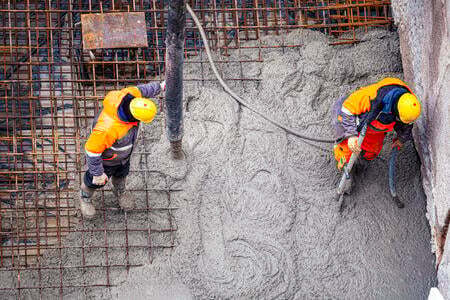
Photo: Getty Images
A project built on collaboration
We are taking a multi-stakeholder approach - drawing on the expertise and insight of developers, manufacturers, policymakers, financiers and sustainability leaders.
Tackling climate change requires bold collaboration. By joining forces with the Climate Group and our wider supply and value chain, we are not just reducing emissions—we are reshaping markets, accelerating innovation, and demonstrating that industry integration delivers long-term value to our stakeholders. - Giovanni Cossu, Head of Sustainability, Capitaland Development
Looking beyond Singapore
This project is part of a broader global push to decarbonise concrete and aligns with regional ambitions for a net zero built environment. We aim to scale this work across Asia and globally, using Singapore as a blueprint for future work.
We invite like-minded organisations across Asia and beyond to collaborate with us in accelerating the decarbonisation of concrete. If you are interested in partnering or learning more, we encourage you to get in touch with Damilola Adeyanju at DAdeyanju@climategroup.org.
Note: all photos used in this article are stock photos sourced from Getty Images.
[1] World Economic Forum, 2024, WEF | Cement is a big problem for the environment. Here's how to make it more sustainable
[2] United Nations, 2022, COP27: UN report shows pathways to carbon-neutrality in “energy intensive” steel, chemicals and cement industries | UNECE
[3] Singapore Building and Construction Authority, 2025, Green Buildings | Building and Construction Authority (BCA)