



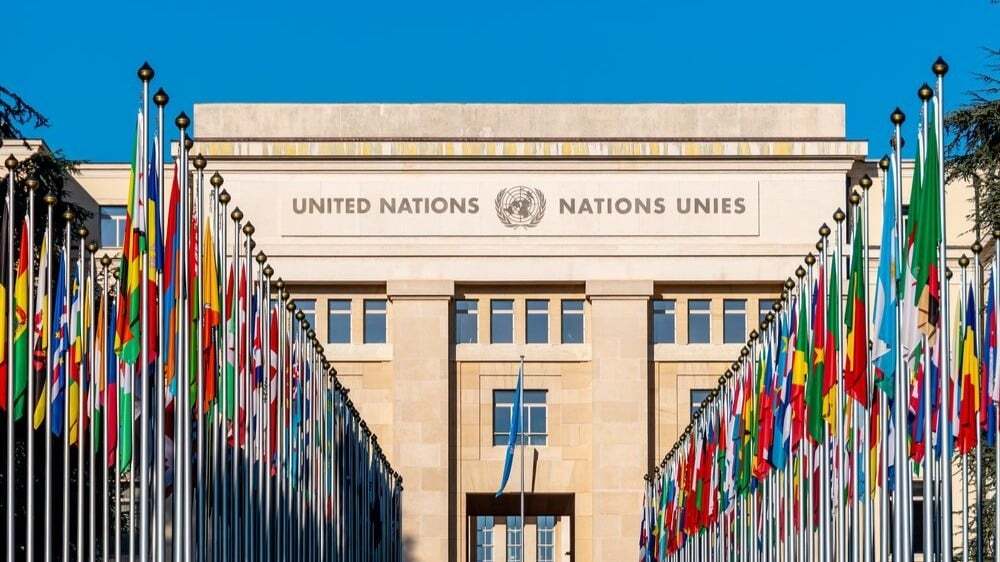
Have we reached peak global governance? What's next?
The Carnegie Endowment for International Peace and the British Academy have launched a multiyear initiative on Global (Dis)order and I was pleased to speak at the launch event yesterday.
So have we indeed reached peak global governance? Perhaps not peak governance, but perhaps peak expectation (if there ever was any) that formal multilateral institutions alone can still deliver results.
The reality is that governance is migrating away from universal treaties and consensus-based forums towards coalitions of the willing: a combination of subnational actors, private standard-setters, hybrid public–private arrangements, and informal groupings operating ahead of, alongside, or beyond formal international processes.
From the outside, this can look like fragmentation or even failure but coordination has not stopped, its simply shifting terrain. This shift matters because it changes who has power, what counts as legitimacy, and how accountability functions. The multilateral system was never fully universal or neutral. It was always shaped by power and selective in practice, often reflecting Western priorities. What is different now is not the existence of selectivity, but its visibility and the degree to which overt geopolitical competition is reshaping cooperation itself.
Three dynamics are unfolding at once:
First, power is fragmenting but influence is concentrating. Those that have historically wielded authority from the West and from the top are being outpaced by actors operating at different levels. We have more actors involved in planetary governance than ever before. Cities, corporations, financial institutions, philanthropic actors, courts, and technology platforms are deeply embedded in shaping outcomes. Yet agenda-setting power is narrowing around those with the capacity to move quickly and at scale. Influence has not disappeared; it has redistributed and, in some cases, consolidated.
Second, action is increasingly decoupled from agreement. We are seeing implementation without treaties, norms emerging before law, and progress driven by those willing to move, and thankfully not those waiting for unanimity. Minilateralism and plurilateralism are no longer peripheral; they are structural features of the system. Small but collectively powerful groups of countries coordinate on specific problems. Subsets of actors move ahead on standards without universal consensus. These are not signs of collapse, but workarounds in an increasingly contested world, pragmatic responses to gridlock.
Third, legitimacy itself is becoming contested terrain. Authority is claimed less through formal mandate and more through speed, scale, and technical capacity and often through inevitability. “This is already happening” becomes a source of political justification. Real economy actors, for example, have reshaped markets so significantly that renewables now outpace fossil fuels in many contexts. Markets and technology are, in some domains, running ahead of diplomacy. The question of who gets to decide and on what basis is increasingly unsettled.
The result is a profound decoupling. Intersecting planetary and transnational challenges climate change, AI governance, biodiversity loss (which most require cooperation) are being addressed under some of the least cooperative political conditions in decades.
The paradox? Well its stark. The more borderless and long-term the challenge, the more constrained the political environment in which solutions must be negotiated. Yet this paradox also contains an important nuance.
In a fragmented system, influence does not vanish, it redistributes. This environment creates space for middle powers to shape agendas, often very effectively. We see this in Barbados advancing the Bridgetown Initiative on climate finance; in The Gambia and South Africa leveraging international courts to influence global accountability debates; in Brazil and Colombia building coalitions to shift conversations on fossil fuel transition. When universal consensus is elusive, strategic coalition-building can carry disproportionate weight.
Regional bodies are also becoming far more consequential in this landscape. On peace and security, for example, the African Union and ECOWAS have taken direct roles in responding to crises in West Africa whether it is imposing sanctions, suspending member states, and deploying diplomatic and, at times, security mechanisms that historically would have defaulted to the UN.
In Europe, the EU has effectively become a global regulator by default through mechanisms such as the Carbon Border Adjustment Mechanism. Actors outside of Europe have to adjust to EU standards to gain access to its market - a form of governance through market power. In Southeast Asia, ASEAN’s centrality doctrine has allowed it to convene major powers in security and economic forums even amid US–China rivalry albeit imperfectly but it has preserved a regional diplomatic architecture that might otherwise have fractured.
And across Latin America, regional trade and climate cooperation blocs, such as Mercosur or newer climate and energy alignments, are shaping supply chains and environmental standards in ways that sit somewhere between global treaty-making and pure national policy. These developments illustrate that fragmentation at the global level has created a space for greater regional consolidation.
This emerging order is messy, overlapping, and uneven. There is more action, but less solidarity. More innovation, but weaker accountability. More actors involved in governance, but fewer shared rules anchoring them. The real question, then, is not whether we have reached peak global governance. It is whether we can design cooperation for a world where universal agreement is no longer the entry condition for action.
A new governance landscape is already taking shape. The choice before us is whether we shape it deliberately, making it more representative, accountable, and aligned with planetary limits or whether we inherit it by default.