



What if cutting carbon didn’t mean driving up cost, or compromising on performance?
At SCS Railways, early and structured collaboration between project teams is showing that smarter decisions from the onset can deliver both real carbon and cost savings, while still fully meeting the complex demands of major infrastructure projects.
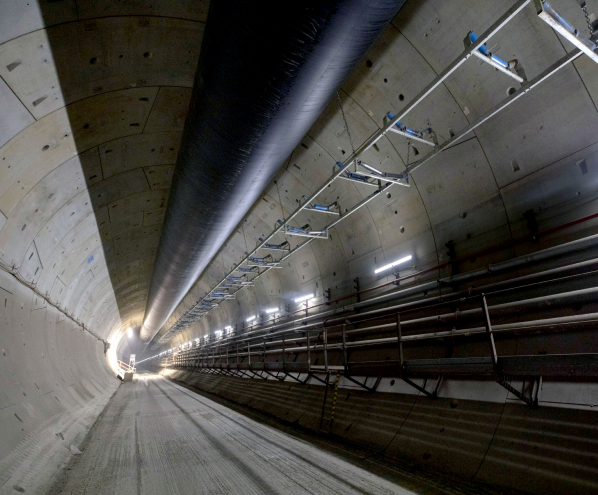
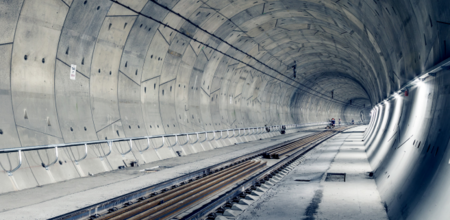
That approach came to life in the construction of the Northolt Tunnels East (NTE) - twin-bore TBM tunnels where concrete plays a critical structural role. One element alone, the tunnel invert - the ‘floor’ at the base of the tunnel - required around 20,000 m³ of concrete. Optimising the decarbonisation of this single component presented a significant opportunity to reduce impact at scale.
Starting with purpose, not precedent
Rather than defaulting to previously used specifications, SCS teams took a step back and asked a simple but powerful question: What does this concrete actually need to do - and when?
The teams assessed:
- The long-term performance required for safety and durability
- The early-age properties needed to support construction sequencing, e.g. early strength and workability
Ahead of construction, teams worked together to define what the concrete actually needed to do - both during construction and over its full design life - this shared understanding created the foundation for smarter decisions later on.
A collaboration that unlocked better outcomes
These conversations between construction managers, site engineers, designers and materials engineers worked together closely - facilitated by the environmental sustainability team - went beyond specifications, considering programme constraints and real-world construction needs.
The collaborative review revealed a key insight: the early-stage performance required for the chosen construction method could be achieved with a lighter concrete mix than originally specified - without compromising long-term performance.
Less material, less carbon, same performance
The result was a significantly optimised mix, reducing the share of cement from 440 kg/m³ to around 300–320 kg/m³.
Across the NTE tunnels, this delivered:
- Savings of around 2,200 tonnes of CEM I
- A further 100 tonnes of GGBS
- Over 2,000 tonnes of CO₂e avoided, alongside substantial cost savings
This was all achieved through better collaboration and smarter decision-making, not new technology or added complexity.
A model for lower-carbon infrastructure delivery
This outcome was the result of close collaboration across the project, including by Alexander Zhamgotsev from the Materials Engineering team and colleagues from the NTE Tunnelling team.
Their work demonstrates how early engagement, clear performance thinking and cross-disciplinary collaboration can unlock material efficiency at scale - and deliver lower-carbon concrete today.
For ConcreteZero, this is exactly the kind of leadership the transition needs: using existing tools, teams and expertise to build infrastructure that performs. But with less carbon built in.