



The Transport Dispatch is our take on what will be important for the global shift to a clean transport future.
Our transport experts regularly share their insights and analysis from the frontline of the EV transition, and you’ll hear from partners and members of our influential EV100 network.
Edition #3 | April 2025
1) Companies will play a critical role in keeping regulatory frameworks effective and strong
The policies that drive the EV transition in Europe are under pressure. Last month, the European Commission introduced an ad-hoc flexibility to its CO2 target. Then, on Monday, the UK Government announced it would introduce flexibilities to the ZEV Mandate, which requires carmakers to sell a greater percentage of EVs every year.
Monday's move was framed as a response to US tariffs imposed on the UK car industry. But it had, in fact, little do with it, as the ZEV Mandate only covers cars sold in the UK. (The announcement was expected; it’s the outcome of a consultation Climate Group contributed to earlier this year.)
“The Government is sticking to the 2030 phase-out for petrol and diesel cars – that’s the good news. But introducing flexibilities to legislation that is clearly doing its job confuses the market and hampers the roll-out of infrastructure,” Dominic Phinn, our Head of Transport, commented (see Independent, Evening Standard).
Both in the EU and the UK, the regulatory framework behind the EV transition holds – but a slow erosion through the introduction of ad-hoc flexibilities is a worrying sign for any company that is investing in the shift to cleaner transport.
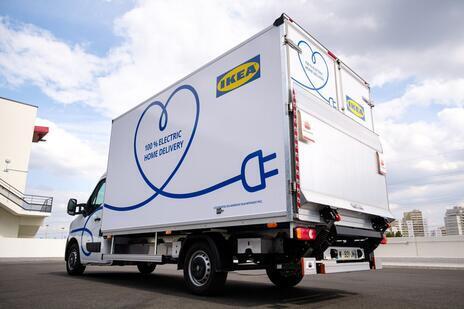
“As a leader, it's super important for us to have regulatory stability,” says Jack Berringer, EU Public Affairs Leader at Ingka Group/IKEA. “You have to consider the way in which all of these pieces of legislation interlink. And in many cases if you take out one piece of a puzzle, and start to change things, that knock-on effect is quite considerable.”
IKEA is one of several EV100 members, also including EDF, AstraZeneca and Maersk, who have started to speak out on the critical importance of regulatory stability right now.
“It’s essential for companies, investments, and competitiveness that the regulatory framework holds up,” says Marida di Girolamo, Senior Policy Manager, EV100 at Climate Group. “As policymakers in Europe are adjusting to shifting geopolitical realities and unprecedent trade challenges, constructive corporate voices will be decisive in keeping in place the vital framework that is here to keep Europe electrifying – and competitive."
For a glimpse of just how ambitiously fleets are driving the global EV transition forward, look no further than our latest Progress and Insights Report Transport, which was published last week.
Join EV100 ,
2) India's companies are finding ever more innovative ways to drive their EV transitions forward
At the same time, India is speeding ahead. With an ambitious government target for EVs to make up 30% of total passenger vehicle sales by 2030, adoption is growing. Analysts at S&P Global Mobility estimate that the country’s 2024 passenger EV production has increased by 22.5% compared to the previous year.
Our Progress and Insights Report Transport shows what the country’s accelerating transition looks in practice.
Take Lloyds Metals and Energy, for instance, who are mining iron ore in a region that’s so remote, a grid connection was hard to come by. It’s testament to the determination of the EV100+ member in pushing its electrification agenda that it managed to be connected to charging infrastructure anyway – in very little time.
Meanwhile in urban India, Zomato is finding ever more innovative ways to encourage its drivers to choose EV: the first food ordering and delivery service company to join EV100 partners with EV rental agencies to provide its delivery partners with offers and discounts, supports access to special loans, and runs innovative awareness-raising campaigns.
On May 15, we’ll bring together members, prospective partners, government officials and key stakeholders from the EV ecosystem in Delhi to exchange insights, share best practices, and address challenges in accelerating EV adoption in India.
The EV100 India Conclave will feature the launch of key reports and highlight Climate Group’s leadership in the e-mobility space. Panel discussions will focus on emerging business models, and practical solutions from experts across the value chain to advance towards a 100% EV transition by 2030.
Interested in exploring how our campaigns can support companies’ EV priorities? Check out the EV100 India Conclave programme.
Find out more ,
3) Events in the UK, Portugal and Germany chart a way forward for fleet electrification and the global EV transition
Here are three events our team recommends in the coming months:
- Transport & Energy, a leading UK-based publication tracking the transition to net zero across two critical sectors, are hosting their inaugural Fleet Electrification Summit (9 July, London, UK). The event, with Climate Group as a supporting partner, brings together transport and energy professionals from the private and public sectors to help accelerate decarbonisation of fleets.
- At the Global Fleet Summit (12-14 May, Cascais, Portugal), fleet professionals, experts and thought leaders will discuss how to adjust strategies and stay focused on fleet goals, including electrification, amid shifting geopolitical realities.
- The International Transport Forum (21-23 May, Leipzig, Germany) convenes leaders from the transport, innovation, and digital solutions sectors to foster cross-sector collaboration around decarbonisation. Climate Group is partnering with CALSTART, ICCT, and others for the event. We’ll discuss how best to identify – and overcome – the key barriers preventing policymakers, industry leaders, and technology innovators to work together more effectively.