



Asia is Powering Up. It’s supercharging the clean-tech surge, the deployment of renewables, and the rollout of electric vehicles. The region is leading production and deployment methods that are defining the 21st century, shaping new pathways for businesses and governments.
Despite these shifts, Asia’s electricity still uses less clean energy than the global average, and the region produces 83% of the world’s coal power. But with Chinese emissions plateauing for the past 21 months, the direction is clear. With scale, ambition, and urgency converging, Asia has made climate leadership a critical part of its economic strategy, proving that competitive growth and climate action can, and should, go hand in hand.
And it’s having an impact: Asia’s renewables boom is reshaping its energy map and global supply chains; China alone accounts for more than a quarter of global clean energy investment over 2025. When a heatwave hit China in 2025, it was able to meet the extra electricity demand with renewables without straining the grid – now that’s energy security.
The Climate Group Asia Action Summit convenes leaders from business, government and civil society to shape the next era of clean, competitive growth in Asia. This is where frontier solutions, investment pathways and cross‑sector partnerships come together - and where the region’s leadership trajectory is being set.
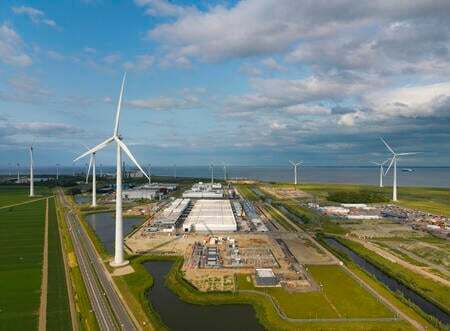
Other countries are also setting bold targets to rapidly scale up their renewable sectors, reducing dependence on foreign energy sources, with India, Indonesia and Vietnam all aiming for over 40% electricity from renewables by 2030. South Korea is investing heavily in hydrogen, notably South Chungcheong’s $7.8 billion commitment to develop the nation’s largest hydrogen industrial cluster.
These investments are to shield South Korea from supply bottlenecks, such as pipeline failures or rising energy prices in producing regions, which could otherwise threaten national energy independence and security.
In addition to clean energy driving more than a third of China’s GDP growth in 2025, its electric vehicle sales continue to break global records. And again, it’s not just China: Vietnam has rapidly become a global leader in EV adoption, with EV sales over 40% of total new car sales (up from less than 0.05% in 2021); India’s EV adoption has surged 11 times in just five years; and Thailand has turned itself into a major EV manufacturing hub. Markets across Asia are seeing the strategic advantages of EVs and are driving this global transition.

Yet, this growth brings significant challenges, as climate vulnerabilities and economic imperative are accelerating the region’s need for urgent action. With its fast-growing middle class and continued urbanisation, growth the demand for cooling/heating, and the rollout of AI datacenters, the demand for electricity and critical infrastructure is growing rapidly.
Yet Asia is already heating up at twice the global average, and some of its main cities face a high risk of flooding. Nearly 1.8 billion people in South Asia will face extreme heat risks by 2030 and more than one in five people at risk of severe flooding by 2030, according to a World Bank report.
The cost of any inaction would pose a direct threat to Asia’s manufacturing; climate change could shrink Asia’s GDP by up to 17% by 2070. For companies operating in the region, resilience is no longer a defensive strategy; the need to invest in clean-tech is an immediate, foundational requirement for growth and economic stability.
Whilst geopolitical shifts are changing the climate landscape globally, with Europe moving slowly and the federal government in the US backtracking, Asia is strengthening its position as driver of the transition day-by-day. The region now faces a key question: what actions will define the next phase of Asia’s climate leadership, and how can other regions learn from their progress to protect their economies and increase energy security?

To help answer these questions, the Climate Group Asia Action Summit will convene leaders from business, government and civil society to unpack this question, and shape the next era of clean, competitive growth in Asia. A place where frontier solutions, investment pathways and cross‑sector partnerships come together, we'll ask how this success can be sustained – and how the rest of the world can keep up.