



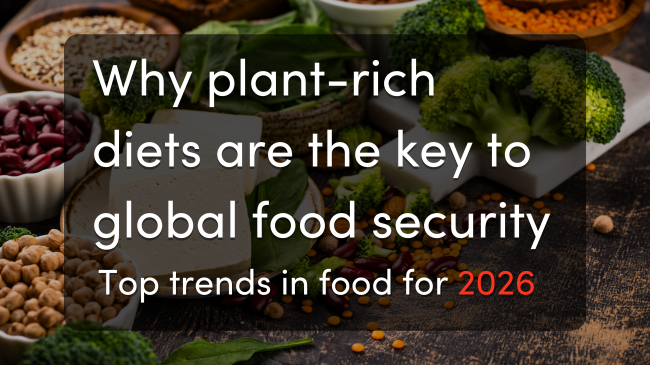
As the global population grows, so does the need for food and, specifically, protein. To meet that growing demand without speeding up climate change, a shift to sustainable, plant-forward food is critical. And slowly, a change is happening.
Over the past years, plant-based diets have surged in popularity, with global suppliers bringing plant-based alternatives well beyond Veganuary to supermarkets, food shops and restaurants. Yet, as the recent US dietary guidelines capture, meat and dairy heavy diets are back in fashion following recent health and wellness trends that prioritise a high protein, wholefood diet. While cutting back on processed foods can benefit people’s wellbeing, both the health of the planet, and the people on it, will significantly benefit from a move toward plant-based diets.
Below are four trends for 2026 that might just speed up that shift and lay out what governments and businesses can do next to ensure their food policies align with a sustainable future.
The importance of protein diversification
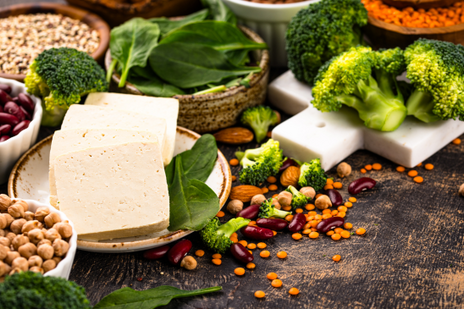
People need protein, and the growing global population will have a major impact on the global food system and land use. Currently, 60% of global protein sources come from plants, such as legumes, nuts, seeds and vegetables. The other 37% comes from meat and dairy - which use no less than 83% of the world’s farmland, and contributes some 58% the emissions that are related to the production of food.
Meat-heavy diets produce over twice the CO₂ emissions of vegetarian or meat-lighter diets; and momentum for diets that are based on wider set of proteins is building as the impact of processed food on people’s health and the environment becomes clearer by the day.
2026 is the year when food policy, climate resilience and economic strategy must finally converge, as governments and business recognise that a plant-rich food system is a triple win: leading to better health (and cheaper healthcare costs) stronger economies, and a safer climate. Plant‑rich diets move from “nice to have” to core risk‑management, and countries like Denmark, who are investing €96 million into plant-based research and actions, publishing the world’s first national action plan for plant-based foods are signalling where the global market is heading.
Looking for alternative proteins doesn’t mean taking meat and milk off the menu completely. ‘Hybrid’ foods, products that combine meat with plant-based ingredients (for example beef mince made of 75% beef and 25% mushroom), already significantly lower greenhouse gas emissions. These foods are increasingly on the radar of many companies; keeping the taste and texture consumers recognise while at the same time, reducing environmental impact.

The power of governments – purchasing, procurement and supply chains
Investing in plant-based proteins is smart economics. The global protein market was valued at US $52.28 billion in 2024 and is projected to nearly double to US $108.76 billion by 2034.
With the benefits of plant-based proteins in mind, more governments and guidelines are prioritising including a wider range of proteins n in their procurement strategies. In December 2025, New York Mayor’s Office of Food Policy released its Food and Climate Strategy, outlining how increased efficiency in distribution and supply chains is key to ‘mitigating the climate and environmental impacts of food.’ The policy is underlined by the 10-year Food Forward plan, seeking to ensure that New York City’s food produced, distributed, and disposed of sustainably.
Whilst progress has been made, more governments and companies need to use their purchasing power and procurement policies to prioritise climate-friendly food. Their demand can shift sustainable standards and drive the production of low-carbon foods.
Food security and sovereignty
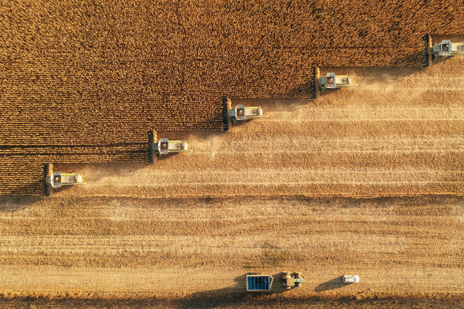
As harvests fail due to global warming and the demand for food rises, food security is increasingly high on the political agenda. Shifting to plant-rich diets is essential as it maximises the efficient use of agricultural land and resources, offering the best chance to ensure global food security. In contrast, continuing animal agriculture at an industrial scale uses disproportionate land and resources, worsening food scarcity and insecurity worldwide.
In addition, boosting plant-based foods supports food sovereignty as it builds resilient, fair food systems that put farmers, consumers, and nature first. Leadership is emerging in Singapore, with it's ‘30 by 30’ goal. It aims to produce 30% of the nation’s nutritional needs by 2030, with a focus on sustainable practises, workforce education, and sourcing alternative proteins.
Sustainability beyond the plate: Just transition in food supply chains
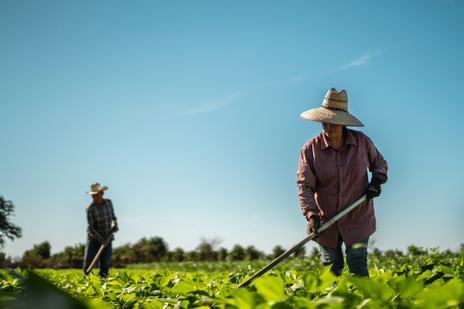
Sustainability isn’t just defined by the food on our plates; it needs to be integrated throughout the entire supply chain. As the sector moves toward sustainability, ensuring fairness and the protection of workers’ rights is critical. Focusing on a wide range of proteins from plants could create up to 83 million jobs worldwide by 2050, meaning government investment in plant-forward diets supports a fair transition as well as boosting the economy.
As we move away from meat and dairy, farmers should be at the heart of the transition. With regenerative practices that improve soil health, this shift can empower farmers and support a just transition.
At Climate Group, we partner with governments and corporates to map supply chains, align procurement strategies, and bring together key players to share insights that drive emissions reductions. In 2026, collaboration will be key to keeping governments on their sustainable tracks. Through the Under2 Coalition, we support subnational governments to align their strategies with green finance, foster communities of practice, and unlock finance for climate adaptation.