



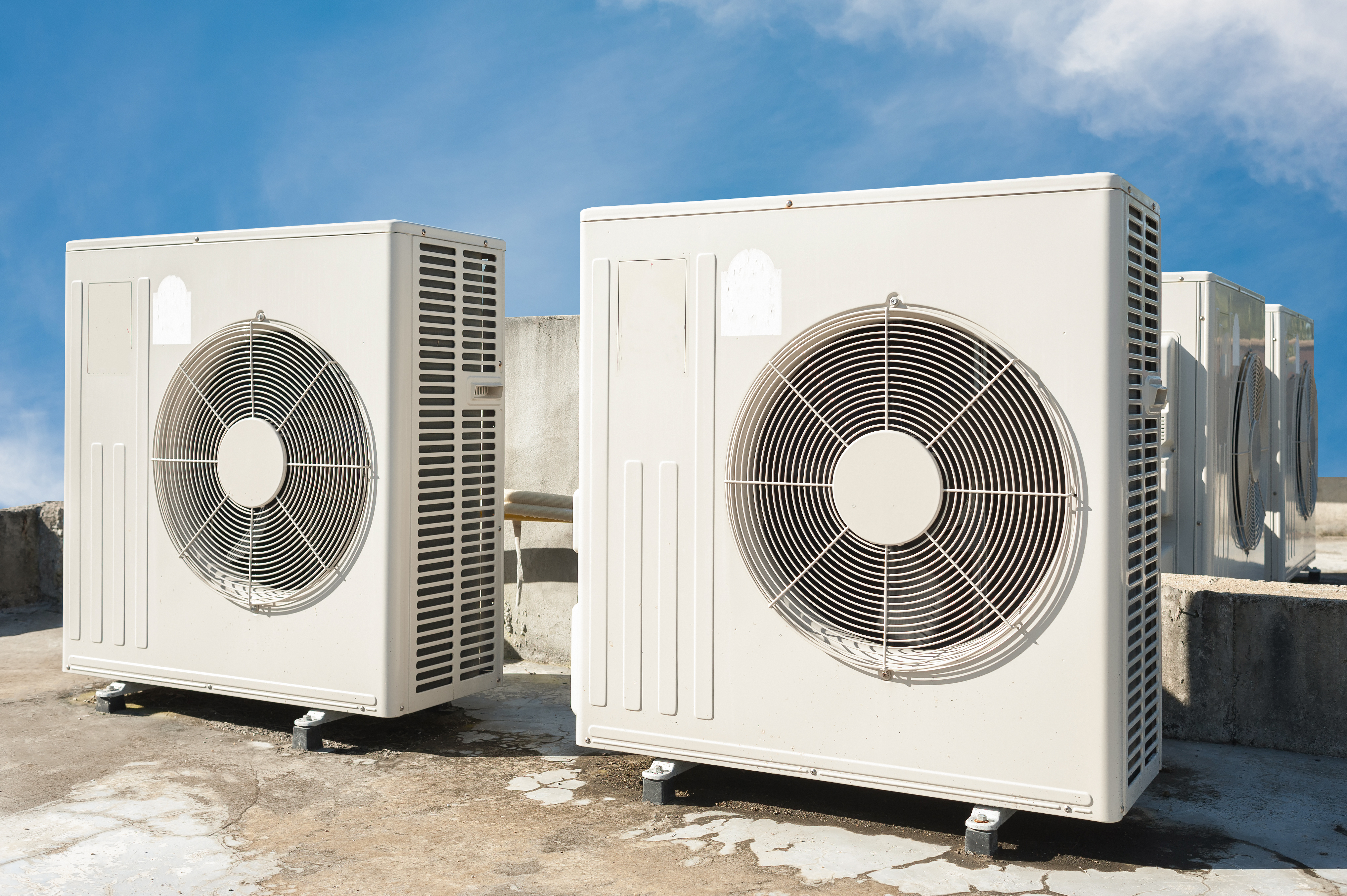
- Air conditioning is now the fastest-growing source of energy demand for the building sector, with increased energy use expected every year to 2035.*
- Leading international businesses, including ABB, Danfoss and Johnson Controls, have urged policymakers to support the manufacturing, distribution and use of high-efficiency cooling equipment with higher minimum performance standards.
- This ask is part of a series of global policy principles to drive significant energy savings, drawn up by Climate Group’s Smart Energy Coalition and backed by major international companies.
22 January 2026, London – Ten leading companies, including household names like ABB, Danfoss and Johnson Controls, are calling on policymakers around the world to drive up global energy efficiency by setting higher minimum energy performance standards (MEPS) for key appliances such as air conditioners.
In an open letter, the 10 corporates back five global principles to make significant energy savings. This includes better support for the manufacturing, distribution and use of high MEPS appliances, such as air conditioning, fridges, freezers and lighting; more efficient industrial cooling; and higher standards for buildings through enhanced building energy codes.
According to the IEA, to stay on track for net zero by 2050 the average appliance in 2030 needs to consume 25% less energy compared to 2020, and new buildings need to use 50% less energy for heating and cooling by 2030.
Energy efficiency is one of the most cost-effective strategies to reduce emissions, enhance energy security and boost resilience, the letter says.
Sara Vad Sørensen, Vice President, Head of Public Affairs, Danfoss said:
“Cooling has become one of the fastest-growing sources of energy demand and emissions across the world. The technology to deliver highly efficient, low-emissions cooling already exists, but progress now depends on scale and implementation. For industry, energy efficiency is not a nice-to-have. It is the first fuel, and fundamental to competitiveness and decarbonization. Accelerating the uptake of efficient cooling solutions is essential if we are serious about managing energy demand while supporting economic growth.”
Katie McGinty, Vice President and Chief Sustainability and External Relations Officer, Johnson Controls, said:
“Sustainability is no longer a side conversation; it’s the ultimate competitive edge. Across mission-critical industries we’re seeing the same story: when we pair efficiency, electrification, and digitization, organizations cut carbon, cut costs, and boost uptime all at once. That’s why the Smart Energy Coalition’s policy priorities matter so much — higher standards, transparent data, smarter renovation, and innovative financing turn proven solutions into global scale.”
Anke Hampel, Group Head of Sustainability, ABB said:
“Energy efficiency is not an if, it's a must. It is the low-hanging fruit we need to bridge our path to a future where all energy is clean energy.”
Rising global temperatures are leading to increased use of cooling systems. Last summer saw record-breaking temperatures in the UK, Central Asia, Japan, South Korea and parts of Europe. Air conditioning is now the fastest-growing source of energy demand for the building sector with an annual increase of nearly 4% expected until 2035 under current policies.
The 10 signatories to this letter are all members of Climate Group’s Smart Energy Coalition, a group of over 100 corporates all committed to energy efficiency improvement. The Coalition has today launched five Global Policy Principles that policymakers worldwide must action to accelerate the global shift towards smarter energy use.
Higher MEPS is one of the five priorities. The others are promoting robust energy management and transparent reporting, advancing renovations, including passive design techniques and circularity, scaling up investment and innovative financing. They aim to ensure energy efficiency remains a top priority in national and global climate processes through public and private sector collaboration.
Nicola Cullen, Senior Manager of Energy Systems, Climate Group said:
“Energy efficiency is the quiet force powering the energy transition. Across the Smart Energy Coalition, our members prove that it cuts costs, boosts performance and strengthens energy security. Adopting our five global policy principles, including raising energy efficiency standards on manufactured goods and cooling buildings with less waste, will drive down energy demand while helping businesses operate more effectively in a fast‑changing world. Policymakers need to act now to make energy‑saving technologies easier to access and work with businesses to unlock the investment needed for smart innovation that delivers impact for people and planet.”
At COP30, governments reaffirmed their 2023 commitment to double the annual rate of energy efficiency improvement by 2030 in the effort to avoid 1C of global heating. With just 4 years to go, policymakers must urgently take steps to accelerate action. Well-designed energy efficiency policy provides incentives to invest, it reduces participation barriers and aligns the goals of businesses, governments and communities.
For media enquiries, please contact Daniel Kramb on dkramb@climategroup.org.
Smart Energy Coalition: Our Global Policy Priorities